More homes,
led by communities.
Street votes empower local people to add more and better homes to their communities.
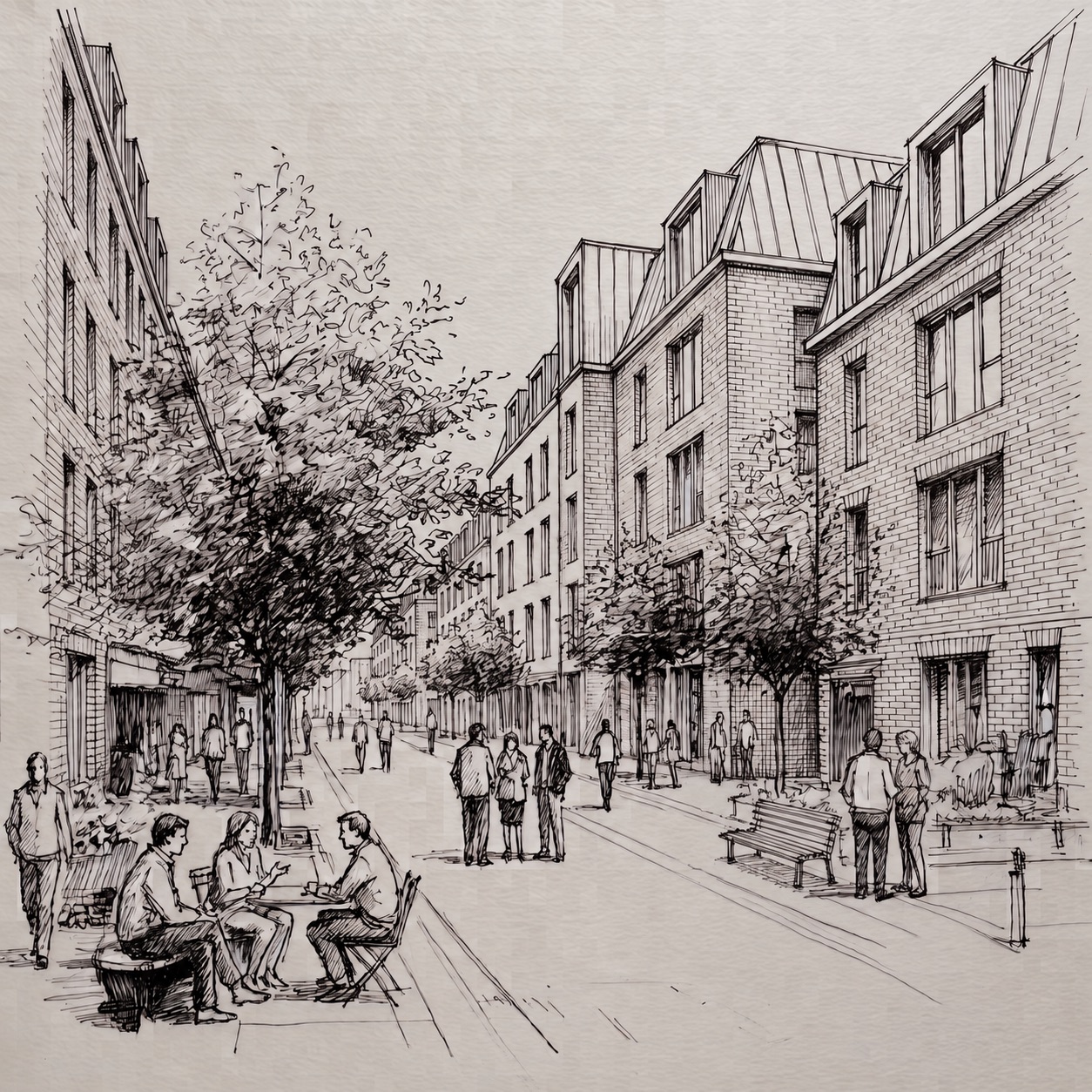
Street votes empower local people to add more and better homes to their communities.

The housing crisis cannot be addressed alone by large builders and big schemes. Street Votes are a practical way to give communities more control over the future of their area. In some places that might mean new homes; in others, different rules or no change at all. They offer a way to strengthen local consent while giving more opportunities for small builders to do their bit to address Britain’s housing shortage.

Meaningful discussion and collective decision-making – especially on neighborhood development that shapes our daily lives – form the backbone of true democracy. I'm excited about street votes giving communities the power to build, not just block, putting the financial benefits into residents' pockets while ensuring tenants have an equal voice in the process.

If we want sustainable growth around the country, devolved decision-making matters. Street votes are an interesting proposal that could give communities more power over how their street evolves with the decision taken by the people who know their area best.

Street Votes has the potential to mobilise local people to reimagine their own street or neighbourhood, transforming them from passive ‘recipients’ of development imposed by others to active leaders who design and approve the housing and community facilities which they want and need. This could contribute to meeting local housing need – and in a way that corresponds with the values for good housing set out in the Church of England’s Coming Home report.

Building more homes in the places they are most needed, especially in our large cities, is essential if we want to raise living standards and grow the economy. Street Votes are an interesting proposal that could help unlock smaller brownfield sites, while giving local people more say over how their area evolves.

Suburban intensification is one of the most effective ways of making our cities healthier, happier and more sustainable. But the complexity of dealing with multiple property owners makes it nigh on impossible: a mechanism that could do this efficiently, ensure development is of the highest quality, and win the support of existing communities, is a holy grail of housing policy. These proposals might just have cracked it.






Neighbours work with a designer to set the rules such as what kind of extensions or new homes are allowed, at what height, with what materials.
Every plan has to meet rigorous rules on climate, biodiversity, drainage and design before it ever reaches the ballot.
Only people who actually live on the street get a vote. Tenants vote, not landlords. The bar is deliberately high.
Every homeowner on the street gains planning permission to build within the rules. Part of the uplift funds new council homes locally. New construction has to contribute to new local council homes.
Street votes are a new planning mechanism that sits alongside the existing system. On a single street, residents work together with an architect or builder to propose a design code that permits certain extensions, loft conversions or additional dwellings.
If a supermajority of the people who actually live on the street votes in favour, the plan becomes planning permission. Everyone on the street can build within the democratically chosen rules.
Street votes are beneficial for the areas that are already urban, like terraces, semis and low-rise suburbs close to stations, where there is both infrastructure and room to add a storey or a side return without anyone losing amenity.
The policy does two unusual things at once: give neighbours more real control over what happens on their street, and empower them to build more homes in the neighbourhoods that need them.
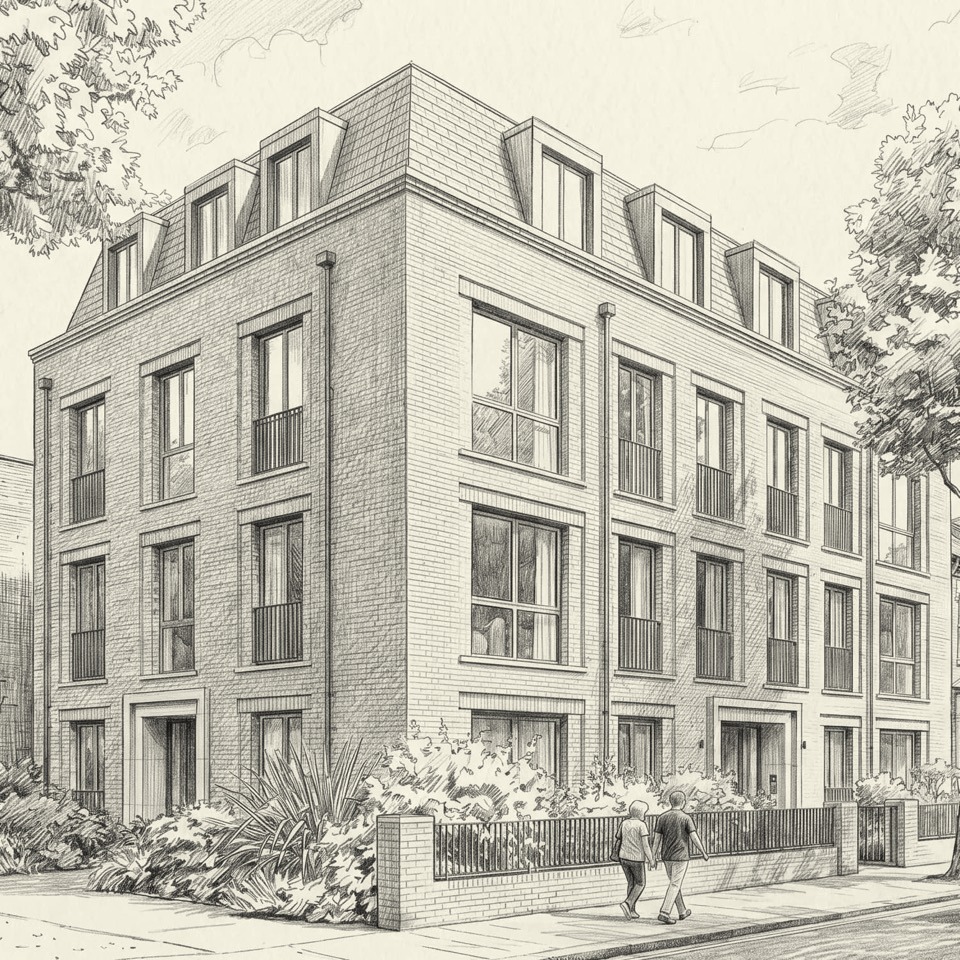
In April 2026, we released The next big lever: street votes in collaboration with Think Labour.
Street votes allow neighbours to come together and agree on rules for new homes on their street, with benefits flowing to the local residents and community. The Government could enable 30,000 new homes a year in the places people need them most.
Read the paper →













Meaningful discussion and collective decision-making – especially on neighborhood development that shapes our daily lives – form the backbone of true democracy. I'm excited about street votes giving communities the power to build, not just block, putting the financial benefits into residents' pockets while ensuring tenants have an equal voice in the process.
The housing crisis cannot be addressed alone by large builders and big schemes. Street Votes are a practical way to give communities more control over the future of their area. In some places that might mean new homes; in others, different rules or no change at all. They offer a way to strengthen local consent while giving more opportunities for small builders to do their bit to address Britain’s housing shortage.
Suburban intensification is one of the most effective ways of making our cities healthier, happier and more sustainable. But the complexity of dealing with multiple property owners makes it nigh on impossible: a mechanism that could do this efficiently, ensure development is of the highest quality, and win the support of existing communities, is a holy grail of housing policy. These proposals might just have cracked it.
Building more homes in the places they are most needed, especially in our large cities, is essential if we want to raise living standards and grow the economy. Street Votes are an interesting proposal that could help unlock smaller brownfield sites, while giving local people more say over how their area evolves.
After decades of inaction on housebuilding, it’s crucial that we tackle the housing crisis by building homes in a way that creates communities. Practical measures that give people a far more direct say on what development looks like for their area could be a powerful tool to help ensure neighbourhoods work for all residents – old and new.
Street votes would provide a mechanism for suburban intensification that is missing from the current planning system. Fragmented land ownership in existing urban areas prevents larger parcels of land from becoming available for redevelopment. Instead, small plots may be developed one at a time, if they can overcome opposition from other residents on the street. Agreeing plans at a street level allows larger plots to be freed up and enables a more coherent, efficient use of space. It also involves all residents which ensures designs that are popular. Increasing the number and floorspace of dwellings in suburban areas will reduce pressures on the natural environment by sparing greenfield land that would otherwise be built on. It will also enable public transport improvements in two ways. Higher density is a necessary condition for efficient and frequent public transport systems because it allows more people to live within walking distance of a transport link. Second, taxation of the value created by new dwellings, and of new residents through council tax, would help to fund local public transport services. Green Alliance supports a trial of street votes as a first step towards enabling suburban intensification.
Street Votes has the potential to mobilise local people to reimagine their own street or neighbourhood, transforming them from passive ‘recipients’ of development imposed by others to active leaders who design and approve the housing and community facilities which they want and need. This could contribute to meeting local housing need – and in a way that corresponds with the values for good housing set out in the Church of England’s Coming Home report.
I have seen at first hand how variants of this policy from Haringey to Tel Aviv have enabled residents to deliver new homes and huge benefits for their families and communities. Critically, street votes would enable ordinary people to have a say in strong design codes to deliver good-quality development that will improve their streets. A "right to build" could be Labour's answer to "right to buy" – an aspirational policy rooted in community rather than individualism.
Street votes are a win-win: they give residents more power over their communities, while helping solve the housing crisis in the areas that need it most. We need to deliver far more homes, but this must come with local support. Street votes offer a way to do that fairly and effectively.
People across the country want more housing. To build more houses, we should give voice to the silent majority — allow residents to chose and champion new homes by giving people a say over developments on their streets. If ordinary people control the future of the places they live, we can wrest control from the vocal minority and get Britain building again.
The Government’s mission to build more homes is clear, and street votes can help turn that ambition into visible change in this Parliament. It gives ordinary people the power to decide for themselves on any new development.
If we want sustainable growth around the country, devolved decision-making matters. Street votes are an interesting proposal that could give communities more power over how their street evolves with the decision taken by the people who know their area best.
Street votes are an extremely important proposal that will help our community and others address severe overcrowding and meet the needs of families. Our current planning processes are slow and unresponsive. Resident-led solutions like street votes and upwards extensions will empower communities to solve the housing shortage.
This street votes plan would allow residents, including social tenants, to take charge of regenerating streets, building new homes, and reaping the rewards of development themselves. This is a very useful addition to the package of reforms to planning, compulsory purchase, public land sales, and affordable homes funding necessary to tackle the housing shortage.
Not only is it an opportunity to develop more homes, but improve the street itself.
Smart idea here for turning Nimbys into Yimbys: “street votes” that allow communities to design and then agree on new development rules.
Based on models in South Korea, Tel Aviv and Houston, this could deliver an extra 30,000 homes a year – govt should take it up now.
This is a great plan and similar to what has worked in many other countries, including in some attractive places I know of in Greece where they had similar settlements. 2/3 of existing residents needed to give automatic planning permission, they get either an uplift or allowed to expand their own home, and have a say on aesthetic character of their neighbourhood.
This is excellent!
It has become popular in Westminster to lambast NIMBYs as small-minded and selfish. But developments are too often ugly, imposed from the top, and ignorant of local character and need – no wonder people object. Street Votes offer a possible way through: genuine street-level local democracy to encourage new homes where they are needed most. It also doesn’t cost a thing – so why not try?
If we are to overcome our over-reliance on motor vehicles – with all the economic, environmental and other costs that this imposes on our society – then we need to find ways of building new homes in places where their residents can easily get around by clean and healthy travel, including by bike. It remains to be seen whether holding Street Votes will work as a way to obtain local community support for building new homes in existing built-up areas. However the idea has to be worth piloting, given the problems it could solve if successful.
Street votes are an opportunity to demonstrate buy-in from residents for new homes in their community.
Students are feeling the housing crisis more sharply than ever. The competition for affordable homes has become intense, particular in cities with universities. This has left many students living in poor-quality accommodation. We urgently need to create more housing options in these areas to ensure students can study, and build their futures without facing housing insecurity.
We need more homes, and we need to empower communities. Street votes provide both. They ensure that the areas of the country with the greatest housing need are able to build, efficiently and with local support. Ultimately this allows workers to move to jobs, raising living standards and improving towns across Britain.
A compelling answer to the question of how you build more homes in London while keeping green belt fans and skyscraper opponents happy.
For families, young people, and low-income workers, the housing crisis is deeply felt. We need more homes in the places people want to live, and this policy is a smart, democratic way to make that happen with local support at its heart.
Street votes present an important supplementary way to build more homes quickly where they are most needed through working with communities. By insisting on effective value capture, a Labour Government can ensure street votes fund new council homes, local services and infrastructure.
One of the biggest barriers to growth in the modern world is our failure to build enough houses in places where people want to live and work. But most proposals to fix it end up failing, because they ignore the thorny politics of the issue. This proposal is different – by providing an incentive for homeowners to support new building, it offers a credible solution to one of the biggest economic problems the UK faces.
The suburbs of Britain's towns and cities have immense potential to deliver much-needed homes in a sustainable and attractive way, yet too often they have fallen behind in their duty to help in providing homes for all who need them. Presented with the tools that this document proposes, communities will be able to make a meaningful contribution to housing delivery whilst also giving them greater agency in the decision-making process – as well as an opportunity to shape their neighbourhoods to suit their collective needs. It deserves serious consideration.
The Labour Government has a bold vision to build more homes, strengthen communities and deliver growth. Street votes would be a welcome boost to Labour's goal of 1.5 million homes by empowering street residents to say yes in my back yard.
There's a severe housing crisis, which disproportionately affects the Black community within the UK. Community-led housing initiatives is a key strategy for addressing many issues. Involving all residents in the planning process can lead to more responsive, high-quality, and stronger community wealth building. Many will have a vested interest to build a community together and make things work.
This is a rare example of a policy proposal with no losers. Densifying suburbs with community consent will be an important step in meeting England's immense housing need.
Getting these changes right is partly about designing effective policies, such as street votes.
Building homes that local people want and can benefit from directly is a win-win for everyone. These proposals have potential to secure support for much-needed considerate development within communities. Crucially, existing residents, including those living in social housing, stand to gain from having a stronger voice in the future of their communities.
The UK needs more homes. One crucial and often overlooked way of getting them is suburban intensification. This carefully thought out and detailed proposal provides one way we might enable more suburban intensification, with community support.
This is an excellent proposal, which could make an immense contribution to resolving the housing shortage. When land values rose during the Georgian era, they built up, bequeathing us many of our most prized streets. This powerful and sophisticated proposal offers a way of doing this again, letting us create beautiful streets that we treasure for centuries.
High rent is one of the most pressing challenges facing Cambridge students today, particularly for postgraduate students with more limited access to College accommodation and disabled students who find a limited supply of accessible housing. Many are forced to choose between financial stability and fully participating in university life. Cambridge SU welcomes any initiatives to deliver more quality housing of all kinds in our city, including student, affordable, and market housing. We particularly support approaches that foreground the perspectives of the local community, such as Street Votes, which empowers communities to come together and allow gentle densification where there is local consent…
No one is forced to move. They just have the option to participate or to sell and let others build. Even the recalcitrant residents of Ranelagh might opt for that no-brainer.
Britain has too few homes and new homes are too often built in the wrong places far from jobs with limited access to public transport. This is bad for the economy and bad for the environment too. Street Votes can help change this. They create a new incentive to get communities to say 'Yes in my Backyard' to suburban densification.
Street votes have the potential to boost local economies by enabling the construction of new homes with community support. This policy creates an opportunity for small builders to take on new projects to build street vote homes and create jobs in the process.
Street votes would turn NIMBYs into YIMBYs by giving householders a say over the design of new, denser development.
By devolving planning powers to the street level, the proposals have the potential to resolve the tension between residents' desire to protect their immediate environment and landowners' desire to realise development opportunities, to the benefit of all.
This fascinating proposal provides an updated and democratised version of the traditional building regulations that created so many of our best streets. It constitutes an important opportunity to create the beautiful homes that the country needs, and to do so with the support of existing residents.
Fields in Trust welcomes the principle of involving communities in shaping development in their local areas and protecting and improving neighbourhood access to green space. We look forward to seeing further details of these proposals.
I welcome the Strong Suburbs report by Policy Exchange and urge policy makers to take note of its detailed proposals to address long-standing obstacles to the well-being of our suburbs, contributing at the same time to the solution of wider urban issues… Once in place, a policy framework such as this will be a terrific stimulus for popular housing development and local economic activity.
65% of people agree that they should be able to meet most of their everyday needs within a 20-minute return walk. Building more new homes in existing settlements would give more people the chance to live within walking, wheeling and cycling distance of town centres and public transport hubs, whilst contributing to net zero. With the right safeguards in place, street votes could help do this, by giving communities the chance to shape how it happens.
Great news that the government is going to trial Street Votes. The housing crisis is one of the central reasons why the UK is poorer than Germany and France. Community-endorsed, gentle and beautiful densification might be part of the solution.
Progressives should look at these proposals with interest. They have the potential to make a difference for the millions of people currently struggling under the high cost of housing; and to build a broad political coalition in order to do so.
High housing costs are eroding the artistic and cultural capacity of our biggest cities, preventing our most productive companies from expanding and accessing the talent they need, and have become a tax on aspiration and community for many individuals and families. Street votes are an elegant solution, in particular for urban densification where need is already strongest, to build more homes by empowering local residents to agree on new extensions and homes that suit them.
Why can't we densify in a more appealing way, turning nimbys into yimbys? The think tank Policy Exchange recently set out the excellent idea of 'street votes': neighbourhood referendums to add another storey on to a street, or to build in gaps between houses, with local people getting a share of the profit.
Spatial planning and urban densification are essential for delivering better services, healthier neighbourhoods and for tackling climate change. Street votes is an important step towards enabling this to happen.
Street Votes will prove a valuable tool to densify communities and give residents a say over how that is achieved on their street. It will also stimulate work pipelines for small builders and innovation opportunities for offsite solutions. These factors make it an attractive proposal, but it has another underdiscussed benefit and that is the opportunity to make existing homes more energy efficient.
Suburban intensification has great promise as a way of creating many new homes at the same time as helping to revive town centres in the sometimes under-valued outer areas of our cities. This report outlines a fascinating potential way of realising this opportunity by giving power to local neighbourhoods.
Suburban intensification is a crucial means of creating new homes in the places they are most needed, at the same time as making our cities more liveable and more sustainable. This fascinating report outlines a way this could happen under the leadership of local communities.
Where we live has a measurable effect on our physical and mental health: on how much we walk, on how many neighbours we know or on how tense we feel on the quotidian journey to work or school. Design affects us from the air we breathe to our ultimate sense of purpose and wellbeing. And an insufficient supply of homes is having a catastrophic effect on generational prosperity and opportunity. Strong Suburbs is a seminal report and a very important part of the movement to increase not just the supply of new homes by changing the nature of planning regulation but also to re-imagine how we think about the humanity, popularity and beauty of the streets and squares in which we live.
Street votes speak to everything I came into urban design to do. Gentle urban intensification, which street votes will enable, is potentially the most important thing we can do to tackle the climate emergency.
Fast-growing firms play a crucial role in the British economy, creating innovative solutions to seemingly intractable problems. In recent decades, however, the UK's planning system has largely locked them out of the housing industry. By devolving planning powers to communities, this outstanding scheme may give entrepreneurs a chance to deliver the housing we need in the places it's most needed.
In recent years, the British public has been told that the only solution to a shortage of homes is building sprawling housing estates in the countryside and high-rise apartment blocks in cities. These proposals show that this is not so. We can build the homes we need through making a more sparing use of land that is already urbanised, and we can achieve this through empowering local communities rather than ignoring their concerns and objections.
Higher densities in existing residential streets will help enable sustainable transport systems, support local services and reduce pressure on the natural environment. Green Alliance supports a trial of street votes as a mechanism for updating our urban fabric for a net zero world.
I welcome this creative report because I believe that the street scale offers unique opportunities for neighbours to participate in planning changes to their immediate local area. It would work particularly well for detached or semi detached properties, which could be replaced with a small apartment block. I can foresee that it could provide an incentive for people who want to downsize from a house they own or rent, but only if they can stay in an area where they have a sense of belonging. This, in turn, could free up a formerly under occupied property in the same street for a family or shared house.
Remember @johnrmyers explaining this idea to me a few years ago. Liked it, but wasn't sure it would ever happen. So well done to him and the others involved!
Excellent report … Really impressive how you have covered the economics, law, aesthetics, and culture in a single coherent document. Really important that the coherence is maintained if Government takes it forward. Well done.
It goes to the heart of what we're saying. We have got to, in our cities, move to denser areas. It can be done well. And one of the interesting things about the pandemic: everyone said everyone will want to move out of cities, but actually we're seeing people being very comfortable living near city centres because they get the sustainability notion.
...for all I am dubious it will work it's still the closest to a big leap forward we're gonna get
Trials of voluntary street or neighbourhood-level agreements to allow gentle densification through permitted development should be explored, enabled by digital technology.
I welcome Ben's work on street votes.
Top down housing reform has been tried, tried again, and found wanting. If we are to make a robust change to the UK's housing market and planning regime we need to take on the insights of political economy. Street votes, by drawing on the insights of Ostrom and Olson, may just be that.
This excellent report shows how we can win the support of more existing communities for new homes in their neighbourhoods by giving them control over the form of development and a share in its benefits. It offers a way of building much-needed homes, while simultaneously making our suburbs into better, more sustainable and more liveable places.
If the definition of madness is doing the same thing over and over again and expecting different results, then these proposals represent a return to sanity. Housing and planning policy desperately needs fresh thinking – and this is the genuine article. We can only restore faith in the new development by prioritising beauty and empowering communities. Street Votes would put these principles into action.
Street votes could help to diversify the supply of sites for housing, helping small builders to grow and breaking the hold of the big developers. This paper could provide a new start for our planning system that allows communities to take control over their lives and define the direction of their areas. Ultimately, this is how we will solve our current housing crisis and bring communities together for the betterment of all.
Too often housing is seen as being imposed on a community, rather than planned with them… a new system, designed to bring in the local community to help determine what sort of building is needed in an area as well as, crucially, share in the economic benefits from doing so would help encourage building and improve the tone of the housing debate. Policies like Street Votes represent the first real attempt to reckon with this issue, ideas which should be taken forward by Labour.
[…] as well as the street votes proposal championed by the Yimby Alliance and Policy Exchange, would improve this greatly, and should be included in the forthcoming Planning Bill.
This is a brilliant report, which I wholeheartedly support. I believe these proposals could revolutionise the way we build homes in this country, strengthening high streets, enhancing neighbourhoods and celebrating local character. Moreover, though the proposals represent the most radical and innovative rethinking of our planning system for generations, they are embedded in sound cultural and historic precedents that embody some of Britain's most successful urban traditions. I hope to see them included in the upcoming Planning Bill.
If successfully implemented, street votes could be an effective tool for encouraging more dense, sustainable development in England.
Many economists believe that restricting housing supply is a drag on our economy and puts us at a significant disadvantage. Affordable housing is essential for social mobility, and the so-called street plans could potentially deliver thousands of homes near public transport in high housing cost areas, with economic gain shared among all the community.
Community Land Trusts have demonstrated their enormous potential to provide affordable, high-quality homes and neighbourhoods. I would welcome street votes as a democratic means for Community Land Trusts to be able to bring forward their plans with more ease and certainty.
We are excited about these proposals and see the potential for a practical and inclusive plan for urban development. We can create more liveable and sustainable cities through suburban intensification, while providing badly needed homes. This important report illustrates a path to how this could be achieved by engaging local residents.
I am delighted to see one of the key recommendations of Roger Scruton's Building Better, Building Beautiful Commission developed with such care and detail. I praise, in particular, the way in which this document proposes we should create badly needed homes in ways that conserve what is good and empower those who are local.
People need to see the benefit of development to welcome the new homes London so desperately needs.
Street votes could be a useful way to create more small sites, although it will also be vital to bring forward more large sites under the current system.
The British planning system gives neighbours enormous de facto rights, and incentives, to block one another from developing, resulting in a systematic undersupply of housing where it is most needed. The social and economic consequences of this are profound and far reaching. Reform of this status quo is both practically and morally complex. Street Votes are the most politically feasible and morally plausible proposal that I've ever come across.
Street votes would be a sensible step to improve housing supply and enhance the environment. By building gentle density in areas that are already developed we can reduce carbon emissions, protect green space and provide more homes in the areas that need it most.
Suburban intensification means creating popular and vibrant neighbourhoods in formerly low-density suburban housing estates. It makes places much more liveable and sustainable for everyone while also providing more much-needed new homes. This report outlines a way in which it could happen more often, under the leadership of local communities. These are important proposals, and they deserve close consideration.
It is important that people have proper control over their immediate surroundings: it is they who should define beauty, for it is they that will live with it. This kind of control can unlock the negativity to local development arising from a feeling of a lack of control and support the established historic process of intensification to the benefit of those who live there. By putting the future of streets in the hands of the inhabitants, this proposal could unlock the construction of many new homes.
Spatial questions – town planning, zoning, housebuilding and so on – are some of the most difficult questions that politics deals with. Any decisions governments make about where homes and infrastructure should be built, or where people should live, involve difficult tradeoffs and a dizzying array of spillovers and externalities. This paper is rare in that it addresses that challenge head on, and comes up with a solution for building hundreds of thousands of new homes that just might work.
Planning is an enormous problem, and solving the politics of fixing planning is incredibly difficult. But building more homes with the support of local communities could help on many fronts. Street votes are worth trying to see if they can help to achieve that.
The Community Planning Alliance has over 500 local campaign groups mapped. We seek to give communities across the UK a greater say in the planning system. There needs to be a dramatic shift from planning which is done to residents by councils and developers to community participation whereby residents shape the future of the area. We therefore welcome any resident-led approach like this that puts communities in the driving seat.
The proposed Renewal areas present the biggest challenge in the Government's reform agenda. The areas covered are so extensive and diverse. One solution in some areas could be some kind of community creation of codes for gentle densification, such as seen in this report.
HTA has long argued that suburban intensification offers huge opportunities to improve our cities and create badly needed new homes. This report from Policy Exchange offers a powerful way to achieve this through empowering local communities to agree to the forms of intensification that they want.
Neighbourhood Planning has proven that local communities can engage positively in shaping their community and permitting growth. This paper takes that a step further – recognising that 20th century suburbia has been frozen in time, because there is no way the people who live there can choose or benefit from the evolution of suburban streets. Street level democratisation of development is a profoundly important idea that could have a key role to play in addressing both the housing shortage and creating more sustainable and attractive communities. The Government should give careful consideration to these important proposals.
This is a tour de force. Finally, an English planning reform that is practical and politically feasible, but nonetheless has the potential over time to add many more beautiful homes where most needed. Seventy years of planning reform failure demonstrates that we need innovative thinking that also learns from the past. Southwood and Hughes have done just that.
The White Paper is the greatest opportunity in living memory to build the homes we need, and these imaginative, fully worked, detailed proposals for street votes will help it deliver on its aims.
Shouldn't we give under-used alleys in our cities a new lease of life by converting them into additional housing? Definitely! Some will worry about parking provision, but where public transport is strong this should be surmountable.
Suburban intensification can create neighbourhoods that are more sustainable and more liveable. Many of the world's most beautiful cities developed this way, like Valencia, Florence and Istanbul. These excellent proposals show how we could revive this process under the leadership of local communities.
It is very welcome to see sustainability placed at the heart of these proposals for the UK's towns and cities. It is particularly positive to see strong emphasis on addressing whole life carbon, which will help deliver emission reductions across both the construction and the operation of any associated development. As we have seen across UKGBC's work, community-led regeneration and innovative local-decision making offer a valuable means to deliver social value, high-quality homes and net zero together, as we move to tackle both the climate emergency and build places people want to live in.
Hughes and Southwood's 'block plans' proposals for urban densification mirror their 'street votes' approach for the suburbs. Could this be the shot in the arm that Neighbourhood Planning in densely populated areas so badly needs? Some serious pilots are needed to gauge householder enthusiasm for the approach, and its scalability.
Small, local builders are severely impacted by a lack of available and viable land which hinders the delivery of vitally needed new housing. The approach proposed in this report could go some way to create new development opportunities which deliver these much-needed new homes. The ability to develop underutilised, small sites would enable new housing projects specifically aimed at SME house builders. SME builders are best placed to produce sympathetic, good quality homes in sites that have been led by the community as set out in this report. What we would need to ensure is that any policy that creates new sites does not add additional planning or cost burdens onto small builders, who already face a difficult path through the planning process.
A lovely idea from CREATE STREETS to transform 1000's of disused parking alleyways into attractive 'mews style' new homes. This is another way we can address rising housing need through the gradual intensification of brownfield land in our towns and cities.
I have read Create Mews and I have to say – it's another brilliant piece of work. My experience over the years with development proposals on tight urban and suburban brownfield largely hidden sites is that they can be just as controversial as housing estates on green fields in the countryside, and yet they really shouldn't be. The beauty of this concept is that it springs from neighbours working together rather than from mutual suspicion and hostility.
In Ireland, as in the UK there is a serious housing crisis. During my 15 years as a councillor on Dublin City Council I supported building more homes in our city. The street votes proposal is a fascinating idea showing how we could build support from local residents for high quality housing development in their communities. Too often the voices of people who are open to new homes go unheard.